
Color blindness, more accurately called color vision deficiency, is difficulty telling certain colors apart. It usually involves cone cells in the retina that respond to specific wavelengths of light. Red-green deficiency is most common. Blue-yellow and complete loss of color vision are rarer.
Blindness Test
Free color vision tests based on methods used in clinics and occupational screening, from Ishihara plates to hue arrangement and signal-light checks. Choose a test, finish in a few minutes, and see your result in the browser. No account or download required.
Free Online Color Vision Tests
Color Blind Test
Cone isolation screening with separate red, green, and blue channel scores. Estimates likely protan, deutan, or tritan deficiency in a few minutes.
Take the testIshihara Test
Classic pseudoisochromatic plates with hidden figures. The familiar starting point for red-green screening.
Take the testFM 100 Hue Test
Arrange color samples in hue order to measure how smoothly you discriminate similar shades across the spectrum.
Take the testAnomaloscope Test
Match split color pairs with one slider and see how many you accept on a red-green or blue-yellow axis. Screening only, not a clinical exam.
Take the testCambridge Color Test
Controlled chromatic targets with threshold-style feedback along three axes. Useful when you want structured screening detail.
Take the testFALANT Test
Identify red, green, and yellow signal lights as they flash. Relevant for aviation, maritime, and similar occupational practice.
Take the testBlindnessTest.com is a free resource for checking color vision in any modern web browser. Pick a test above, follow the on-screen prompts in a well-lit room, and your result appears as soon as you finish.
Color vision deficiency is more common than many people realize and is often inherited from birth. Someone can go years without knowing they see certain reds, greens, or blues differently until a school chart, job requirement, or everyday conversation makes it obvious.
Most cases involve telling some colors apart with difficulty, not seeing the world in black and white. Red-green deficiency is the most frequent form. Inherited cases tend to stay stable over time, though eye disease, injury, or certain medications can change color perception later in life.
Start with our Color Blind Test if you want the most detailed screen on the site. It uses cone isolation to score how your red, green, and blue channels respond and suggests whether protan, deutan, or tritan deficiency is most likely. Five additional tests cover classic Ishihara plates, hue arrangement, color matching, threshold screening, and signal-light tasks when you want a second opinion or a method-specific check.
Everything here is for screening and education, not a clinical diagnosis. Use your results to decide whether to speak with an optometrist or ophthalmologist, especially if something unexpected appears or you need formal clearance for work or study. Sudden changes in color vision, particularly in one eye, warrant prompt professional care rather than online testing alone.
The Science Behind Color Vision Tests
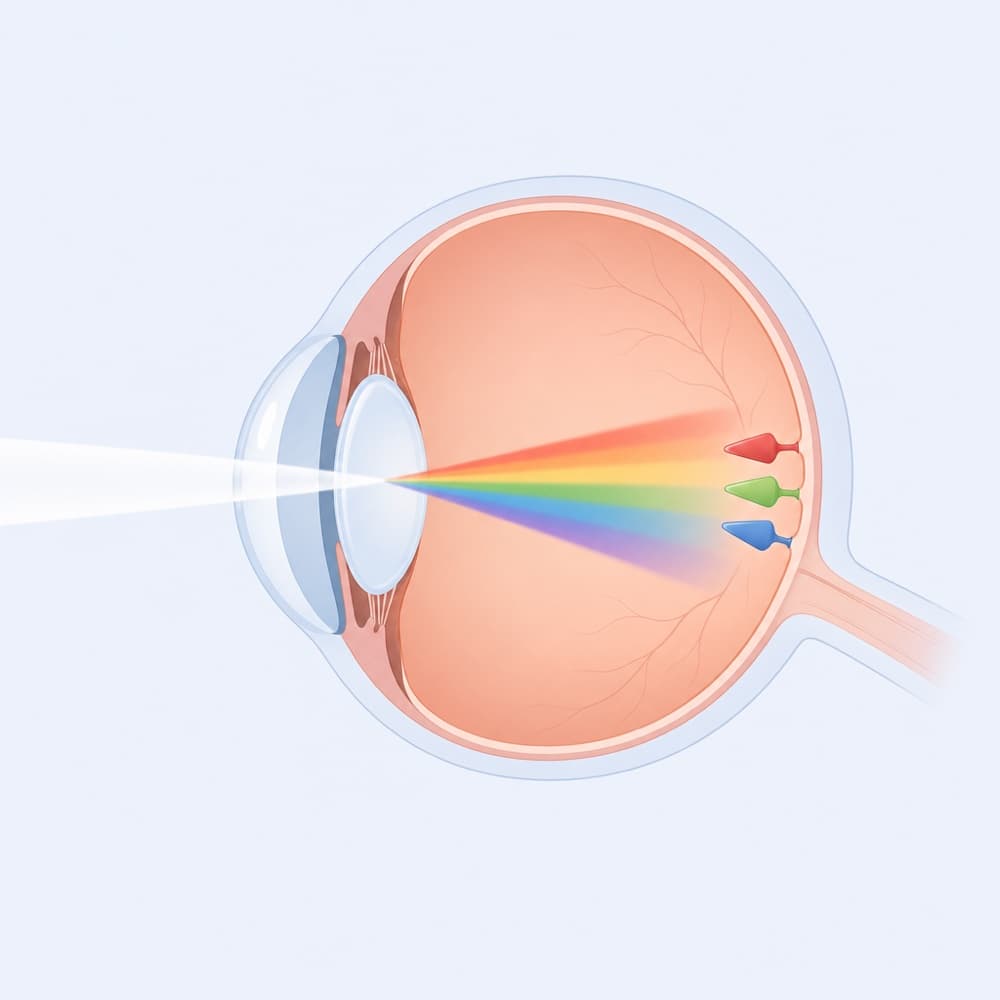
Color vision starts in the retina, where cone cells respond to long, medium, and short wavelengths of light. We often describe these as red, green, and blue channels, although each type overlaps with its neighbors and the labels are only a convenient shorthand.
Your brain combines those signals so you can separate similar shades in daily life, whether you are reading a map, checking wiring, or telling ripe fruit from unripe. When one channel works differently, the result is usually a color vision deficiency rather than a complete loss of color. Red-green forms are the most common and affect roughly one in twelve men.
Clinicians look for telltale patterns on established tests. Ishihara plates hide figures in colored dots. The Farnsworth-Munsell 100 Hue Test checks whether hue steps fall into smooth order. An anomaloscope compares red-green matching settings, and lantern tests ask you to name signal lights in brief timed presentations.
Online tools on this site apply the same principles with simplified on-screen stimuli. They help you understand how you perform on familiar task types, but monitor quality, brightness, and room lighting all influence what you see. Use the results as useful background for a conversation with an eye care professional, not as a formal clinical record.
Types of Color Vision Tests

Color vision is not a single yes-or-no trait, which is why eye care professionals rarely stop at one method. Some checks prioritize speed, others measure fine hue discrimination, and some reproduce tasks that matter in transport, electrical work, or other safety-sensitive roles.
Plate-based screens remain the usual starting point. Our Color Blind Test scores red, green, and blue channels separately using cone isolation, while the Ishihara Test uses classic pseudoisochromatic plates that remain the most familiar first look for red-green difficulty.
When plates alone are not enough, arrangement and matching tests add depth. The Farnsworth-Munsell 100 Hue Test sorts color samples into smooth hue order and can reveal mild losses that plates miss. The Anomaloscope and Cambridge Color Test explore red-green and blue-yellow axes in more detail when you need structured feedback.
The Farnsworth Lantern Test focuses on a different skill: naming red, green, and yellow signal lights quickly on screen (clinical FALANT uses white), similar to occupational lantern checks. Each method has trade-offs, and you can move between the free tools here to build a clearer picture without committing to a single pass-or-fail result.
How to Choose the Right Color Vision Test
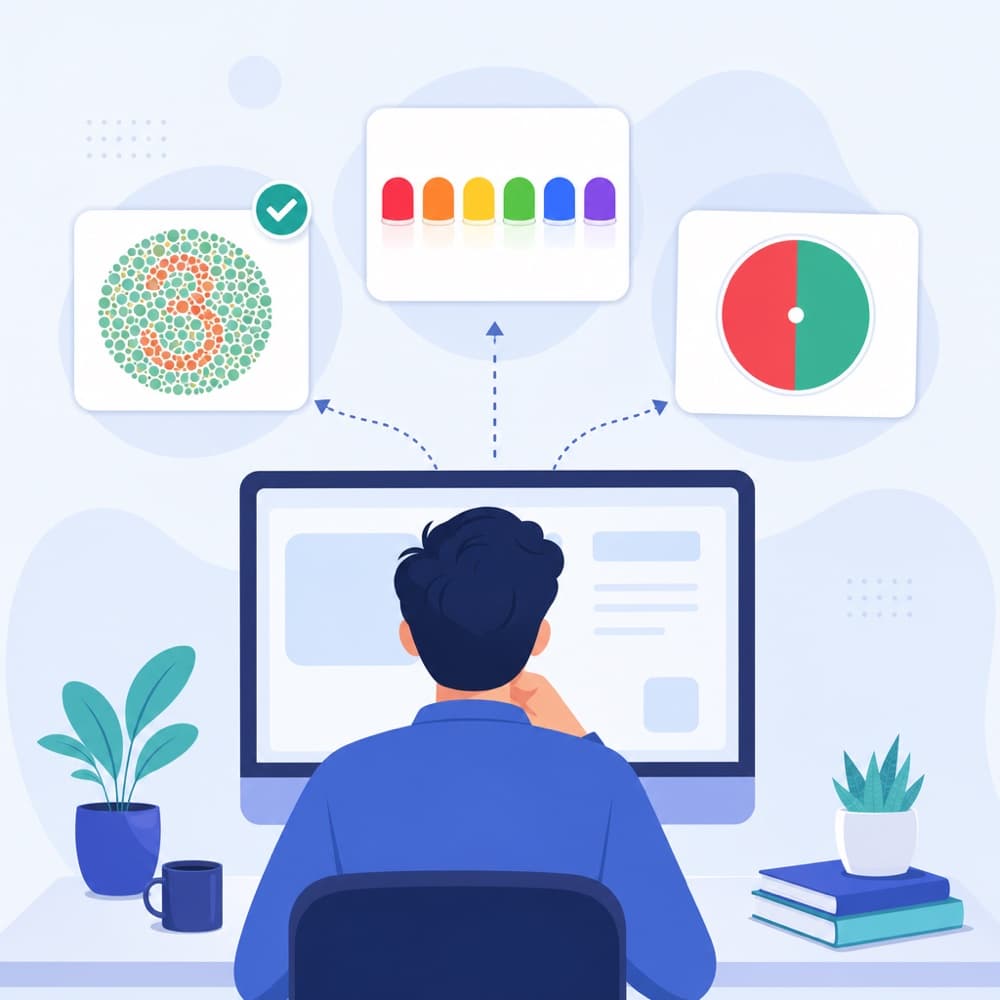
If you have never checked your color vision, start with the Color Blind Test for cone-by-cone scores and a likely deficiency type, or the Ishihara Test for a quick, widely recognized plate screen. Both take only a few minutes and work well as a first step before longer assessments.
Pick the Farnsworth-Munsell 100 Hue Test when subtle shade differences matter in your work or hobbies. Designers, photographers, and quality inspectors often need confidence that they can separate small hue steps, not just pass a basic plate screen.
Use the Anomaloscope or Cambridge Color Test when you already suspect a deficiency and want more detail about type or axis. Choose the Farnsworth Lantern Test if your concern is reading colored signal lights accurately under brief timed exposures similar to occupational checks.
Before any session, set your display to normal brightness, turn off night shift or strong color filters, and sit in steady indoor light. Every test here is free, and you may repeat or combine them. If results stay borderline, or you need paperwork for work or study, book an in-person exam with a licensed optometrist or ophthalmologist.
Private by design
Your results stay on your device
Every test on this site runs entirely in your browser. Results are saved only in your browser's local storage on this device, so nothing is uploaded and no one else can see your scores. Finish a test and it appears on your personal profile page automatically.
Saved in your browser
Results live in local storage on this device. They never touch our servers.
No account needed
Take every test and view your full profile without signing up or sharing an email.
One profile, six tests
Your latest result from each test is collected on a single profile page.
You stay in control
Download a PDF report or clear a saved result whenever you like.
Frequently Asked Questions
We answer the most common questions here. For everything else, see the full FAQs page.
Important Information
Before you start, it helps to know who these tests suit and where their limits apply. The notes below cover children and older adults, workplace color vision standards, and symptoms that call for a proper eye exam rather than online screening alone.
For Children and Special Groups
Many tests work well for children when an adult reads the instructions and keeps a calm pace in a well-lit room. Older adults and anyone with cataracts, glaucoma, or other eye conditions should treat browser results cautiously, since disease can affect color perception as well as overall sight.
Workplace and Occupational Testing
Pilots, electricians, maritime workers, designers, and others may face formal color vision standards. Use these tests to practice or screen privately, but employers and regulators often require an approved in-clinic protocol. Confirm what applies to your role before treating a browser result as proof of clearance.
When to See a Professional
Inherited color vision deficiency usually stays stable over time. New difficulty telling colors apart, especially when it affects one eye only, deserves prompt attention from a qualified eye care professional. Online screening cannot rule out underlying disease or replace a comprehensive eye health examination.
These tests screen for color vision issues but are not a clinical diagnosis. Your screen, lighting, and display settings can change what you see. Read our medical disclaimer. For complete limitations and per-test notes, or see the FAQs for workplace requirements and when to seek professional care.
Ready to check your color vision?
Choose any free test below for private, immediate feedback. No sign-up required.